
Blog
After-the-Fact Permit Partner for Florida Title Companies
Find out how a permitting partner helps Florida title companies resolve open permits and unpermitted work before closing, with realistic expectations.
Key Takeaways
-
A permitting partner prepares and files documents and tracks reviews, but only the local building official decides code compliance and whether a permit can be closed.
-
Florida has no uniform statewide after-the-fact permit process; the city or county with jurisdiction over the specific address sets the procedures, inspections, and fees, so confirm jurisdiction first.
-
Separate permit-record issues from title defects early: the building department handles open permits and code violations, while the title company handles underwriting and closing conditions.
-
Documented final approval or permit closure is what title companies need at closing; a verbal assurance or submitted application alone does not resolve the issue.
-
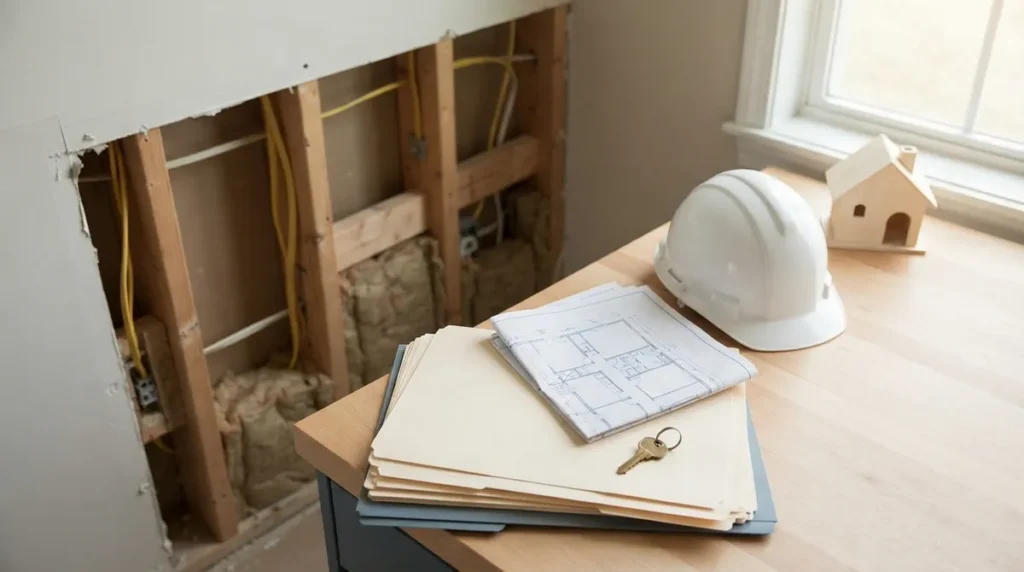
Concealed unpermitted work may require opening walls or ceilings for inspection, so flag potential scope early to avoid last-minute surprises for sellers.
-
Discover permit problems early, since fixing, negotiating credits, or extending timelines is far easier weeks before closing than the day before.
Picture this: the closing is three days out, everyone is smiling, and then someone runs a permit history search. Suddenly there's an open roof permit from 2019, a screened lanai nobody can find paperwork for, or a garage conversion that never saw an inspector. If you work at a title company, you've lived this moment. And if you're looking for a title company after the fact permit partner in Florida, you already know the real question: who can untangle this quickly, accurately, and without making promises they can't keep?
Here's the friendly truth. A permitting partner doesn't approve anything. Your local building department does that. But a good partner is the person who finds the right jurisdiction, pulls the records, prepares the documents, files the application, chases the comments, and keeps everyone updated while the clock ticks. This guide walks you through what that partnership looks like, how after-the-fact permitting really works across Florida in 2026, and how to choose a partner you can trust with your deals.

What an After-the-Fact Permit Partner Actually Does
Let's clear up a common misconception first. "After-the-fact permit partner" is not a formal Florida license or a state-designated category. It's a practical term for a permitting consultant who helps title companies, real estate professionals, buyers, and sellers investigate and resolve unpermitted work or open permits before a transaction closes.
Florida Statutes §553.79(1)(a) generally makes it unlawful to construct, alter, modify, repair, or demolish a building without first obtaining a required permit. When work happens first and the permit comes later, that's an after-the-fact permit. Whether a given project is exempt, and how it gets resolved, depends on the applicable law and the local jurisdiction.
A solid partner typically handles:
- Records requests: pulling permit history and code enforcement files for the property.
- Jurisdiction research: confirming whether the city or the county actually controls the address.
- Document preparation: as-built drawings, site plans, engineer letters, and supporting materials.
- Filing and tracking: submitting the application and following it through review.
- Communication: keeping the title officer, agents, lender contacts, and parties informed.
What a partner cannot do is decide whether work complies or whether a permit can be closed. That authority belongs to the local building official. Any partner who guarantees an outcome is one to be cautious about.

Permit Problem or Title Problem? Know the Difference
One of the most helpful things a title professional can do is separate a permit-record issue from a title defect. They often show up in the same file, but they're handled by different people.
| Issue | Who Generally Handles It | Typical Resolution Path |
|---|---|---|
| Open or expired permit | Local building department | Reactivate, complete inspections, obtain final or closure |
| Unpermitted work | Local building department and code enforcement | After-the-fact permit, inspections, corrections |
| Code enforcement violation | Local code enforcement | Correct the violation and obtain compliance sign-off |
| Title and closing requirements | Title company | Underwriting review, escrow or closing conditions |
| Technical documentation | Permitting partner with design professionals | Plans, as-builts, engineer letters, filings |
Understanding this split keeps expectations realistic. Your title company assesses title and closing requirements. The building department decides code compliance. The permitting partner bridges the gap with accurate paperwork and steady follow-through. If you want a deeper look at what surfaces at the closing table, our guide on what to do when an open permit is found at closing is a helpful companion read.
How Florida After-the-Fact Permitting Really Works
Here's where many deals get derailed by assumptions. Florida does not have one uniform statewide after-the-fact permit application or fee schedule. The local building department with jurisdiction sets the process, the documentation, the inspections, the fees, and any corrective work. Properties inside a municipality are often handled by the city rather than the county.
Florida has 67 counties, but permitting authority isn't automatically countywide. A parcel with a Tampa mailing address might sit in a different jurisdiction than you'd guess, and the same goes near city lines throughout the state. Confirming the right authority is step one. Our building department lookup tool can help you start, and this article on which Florida jurisdiction reviews your project explains why it matters.
Fees deserve a gentle caution too. The Florida Building Code, section 109.4, provides for a locally established fee in addition to the regular permit fee when work begins before a permit is issued. The amount and any other applicable charges depend on the enforcing agency. There is no single statewide penalty figure, and no reliable statewide average for cost, processing time, or approval rate. Anyone quoting one fixed number for the whole state is guessing.
The Typical Resolution Process, Step by Step
While every jurisdiction differs, most after-the-fact resolutions follow a recognizable rhythm. Here's the general path a good partner walks:
- Confirm the jurisdiction and exact scope of work. What was built, when, and by whom, if known.
- Obtain permit and code enforcement records. Identify what's open, expired, or missing final inspections.
- Prepare accurate as-built plans and supporting documents. Drawings should reflect what actually exists, not what someone hoped to build.
- Apply for the required permit or permits. Each trade involved may need its own scope.
- Address review comments. Reviewers may ask for clarifications, revisions, or additional engineering.
- Complete inspections and corrections. Work that doesn't meet code may need to be fixed.
- Obtain final approval or permit closure. This is documented proof the work has been accepted by the authority.
That last step is the one title companies care about most: documented final approval. A verbal "it's probably fine" doesn't help anyone at closing.
What Documents Might the Building Department Ask For?
Local officials can require different materials depending on the work. Commonly requested items include:
- As-built plans and floor plans reflecting existing conditions
- Photographs of the completed work
- Surveys or site plans showing setbacks and footprints
- Contractor information and licensing details
- Product approvals for windows, doors, roofing, or other components
- Letters or sealed documents from Florida-licensed design professionals
If work is concealed, inspectors may require portions of walls, ceilings, or other assemblies to be opened so they can verify compliance. That's not meant to be punishing; it's how they confirm what's behind the finishes. Having a partner who can explain this upfront saves sellers from nasty surprises. To see how documentation is typically prepared, explore our services for as-built drawings, engineer letters, and site plans.
Qualities to Look for in a Partner
Not every permitting firm is built for title and closing timelines. When you're vetting a partner, these qualities matter most:
| Quality | Why It Matters to a Title Company |
|---|---|
| Statewide reach | Your files span many counties and municipalities |
| In-house drafting and engineering | Fewer handoffs when a reviewer asks for changes |
| Fast communication | Closing dates don't wait for slow email chains |
| Honest expectations | No guaranteed approvals or fixed timelines |
| Clear status updates | Everyone knows where the file stands today |
| Experience with expired and open permits | Many title issues aren't purely "unpermitted" |
1 Contractor Solutions works as Florida's outsourced permitting department, serving all 67 counties with in-house drafting, sealed engineering, and a team that responds within 30 minutes. If you'd like to see how that support looks for closings specifically, check out our realtor and closing support and our dedicated page for realtors and title professionals.
Common Closing Scenarios and How a Partner Helps
Every file is different, but a few situations come up again and again. Here are some of the most frequent ones.
The Open Permit Nobody Remembers
A previous owner's contractor started a project, passed a few inspections, and vanished. The permit is still open, sometimes expired. Resolving this usually involves understanding the current status, determining whether it can be reactivated or needs a new application, and completing the remaining inspections. Our resource on how to close an expired permit in Florida walks through the basics.
The Unpermitted Addition or Enclosure
Lanais, garage conversions, and patio enclosures are classics. The path usually involves as-built documentation, engineering where needed, an application to the local authority, and inspections. See how unpermitted work in Florida can be legalized for an overview of what's possible.
The Last-Minute Appraisal or Inspection Discovery
Sometimes the issue surfaces late, after an appraisal or home inspection. That's when speed and clear communication count. A partner who can quickly research the property and set realistic expectations helps everyone decide whether to fix before closing, negotiate, or adjust the timeline. If a hold is already in place, our guide on whether a permit hold can delay a Florida closing is worth a read.
The Code Enforcement Notice
If a violation has already been recorded, the resolution may involve correcting the issue and obtaining compliance documentation. Learn more about code compliance violation support and the broader after-the-fact and expired permit services we provide.
Setting Realistic Expectations With Your Clients
One of the kindest things you can do for buyers and sellers is to be honest early. After-the-fact permitting is a process, not a switch. Timelines depend on the jurisdiction, the scope, and how many corrections are needed. Fees vary by city and county. And in some cases, work that can't be verified or doesn't meet code may need to be corrected, opened up for inspection, or even removed.
A helpful way to frame it for clients:
- We can research and prepare, but the building department decides.
- Costs and timing differ by jurisdiction, so we'll confirm specifics early.
- Documented final approval is the goal, not just a submitted application.
- Starting sooner almost always gives more options before closing.
For a closer look at cost factors, see our article on after-the-fact permit costs in Florida, and for the penalty side of the equation, read about the penalty for building without a permit in Florida.
How to Start Working With a Permitting Partner
Getting a partnership going doesn't have to be complicated. Here's a simple way to begin:
- Gather what you have. Property address, parcel or folio number, any permit history already found, and the issue flagged by the lender, appraiser, or inspector.
- Share the closing timeline. A realistic target date helps the partner prioritize and flag risks early.
- Run a preliminary search. Start with an open permit search to see what's visible.
- Ask for a scope and plan. You should receive a clear explanation of the jurisdiction, likely steps, and potential unknowns.
- Agree on communication. Decide who gets status updates and how often.
You can also see how our team approaches urgent permit rescue when a closing date is tight, and learn more about our approach on the about page. If you'd like to hear from others, see what people say in our customer reviews or visit us on Google — 1 Contractor Solutions.
Statewide Coverage Makes a Real Difference
Title companies rarely work in just one county. One week you're in Hillsborough, the next you're handling a file in Broward, then something in Lee or Orange. A partner with statewide experience understands that each place has its own quirks, forms, and review styles.
If your volume leans toward particular regions, these pages give a flavor of local coverage: Hillsborough County, Miami-Dade County, Broward County, and Orange County. You can also browse the full list of Florida counties we serve. Staying connected is easy too; follow us on LinkedIn or follow us on Facebook for updates.
Why Early Action Protects Everyone
Time is the one thing nobody can manufacture. The earlier a permit issue is discovered, the more options you have: fix it before closing, negotiate repairs or credits, extend the timeline, or restructure the deal. When it's found on the day before closing, options shrink fast.
That's the real value of having a partner relationship in place before a crisis. When a file hits your desk with a permit question, you already know who to call, how they communicate, and what information they'll need. Your clients feel taken care of, and your closings stay on track as often as possible.
Ready to Partner Up?
If you're a title professional tired of last-minute permit surprises, you don't have to chase them alone. A dependable permitting partner brings research, documentation, filing, and follow-through, while the local authority and your underwriting team keep doing what they do best.
When you're ready to talk through a file or set up a standing relationship, reach out for a free quote and let's see how we can help your next closing go smoothly.
FAQs
How do I find open or expired permits on a Florida property before closing?
Start with a permit-history search through the local building department that actually has jurisdiction, since a city may handle the address rather than the county. A permitting partner can pull permit and code enforcement records for you and flag anything open, expired, or missing a final inspection.
Can a Florida title company require an open permit to be closed before a transaction?
Closing requirements depend on the title company, underwriter, and lender involved, so it's best to confirm with your title officer early. What's consistent is that permit status and code compliance are handled by the local building department, so documented closure or final approval is the cleanest proof you can offer.
What does an after-the-fact permit mean in Florida?
It's a permit applied for after construction work has already started or finished without one. The local building department decides the process, fees, inspections, and any corrections, so the experience can look different from one Florida jurisdiction to the next.
Will inspectors require walls or ceilings to be opened for unpermitted work?
Sometimes, yes. If work is concealed, inspectors may ask for portions of walls, ceilings, or other assemblies to be opened so they can verify compliance, and a partner can help you plan for that early.
How much does an after-the-fact permit cost in Florida?
It varies by city and county. The Florida Building Code allows a locally set fee on top of the regular permit fee when work starts before a permit is issued, but there's no single statewide amount, so your partner should confirm the specifics for the jurisdiction in question.
We do this work every day across all 67 Florida counties. Call (866) 314-6931 and we will tell you what your situation actually requires — including when you do not need us.
Related services
Permit Facilitation & Filing
You have a crew scheduled, a client asking for dates, and a permit sitting somewhere in a queue you cannot see. We file it, w…
See the servicePlan Review Coordination
A permit in plan review is not one queue. On a commercial project it can be six queues, each with its own reviewer, its own c…
See the serviceReady to get your permit moving?
One call tells you which jurisdiction controls your project, what it will take, and what it will cost. Most of the time we can scope it on the phone.