
Blog
12 Pros to Hire After an Unpermitted Interior Remodel in FL
Not sure who to hire for an unpermitted interior remodel in Florida? Here are 12 pros and resources to get your project legal in 2026.
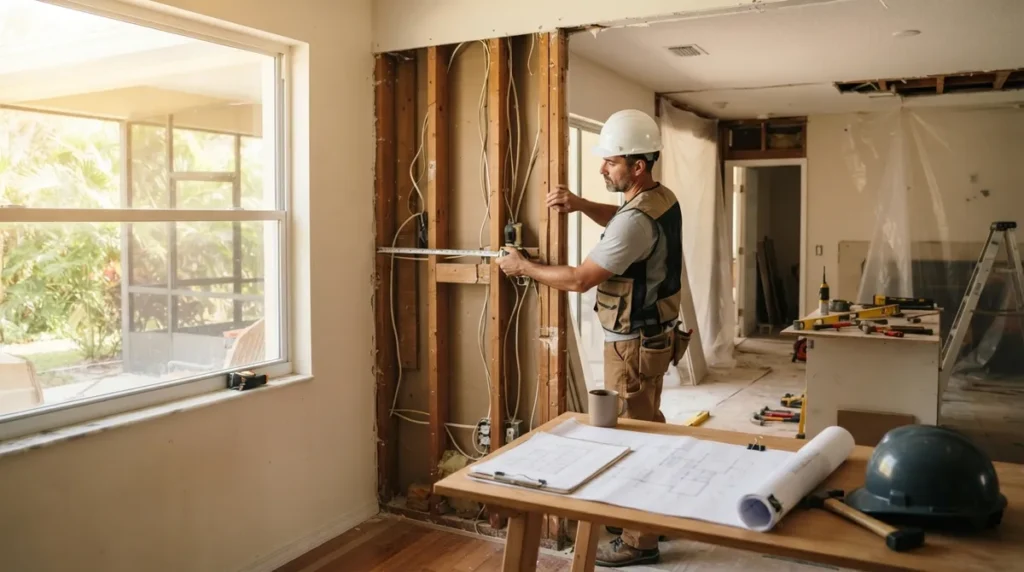
Key Takeaways
-
Hire a team, not one person: a licensed Florida contractor for permitted work, a drafter or engineer to document what was built, and a permit facilitator to handle filings and inspections.
-
Before hiring anyone, confirm which city or county controls your property and request a written permit determination from the building department.
-
Don't assume the July 1, 2026 under-$7,500 exemption applies: it excludes flood hazard areas and all electrical, plumbing, structural, mechanical, or gas work.
-
Electrical, plumbing, mechanical, and gas work are life-safety systems that commonly require licensed trades and inspections, even when other interior work is exempt.
-
Use as-built drawings to document the finished conditions, and bring in a structural engineer if walls were moved or removed to confirm load-bearing status.
-
Watch for red flags like advice to skip permits, no valid Florida license, flat quotes before inspecting, or no written permit responsibilities in the contract.
So you've remodeled the inside of your Florida home, and now someone has asked the dreaded question: "Was that permitted?" Maybe a buyer's inspector spotted it. Maybe a lender flagged it. Or maybe you just realized the work you thought was "cosmetic" actually wasn't. First, take a breath. You're far from alone, and there is a clear path forward.
If you're asking who should I hire for interior remodel without permit Florida situations, the short answer is a team, not a single person. You'll typically need a Florida-licensed contractor for any work that requires a permit, plus a drafting and engineering resource to document what was built, plus someone to handle the paperwork and inspections. The good news is that one outsourced permitting team can often coordinate all of it.
In this guide, we'll walk through 12 professionals and resources worth knowing, when each one matters, and how to avoid the mistakes that slow people down in 2026.
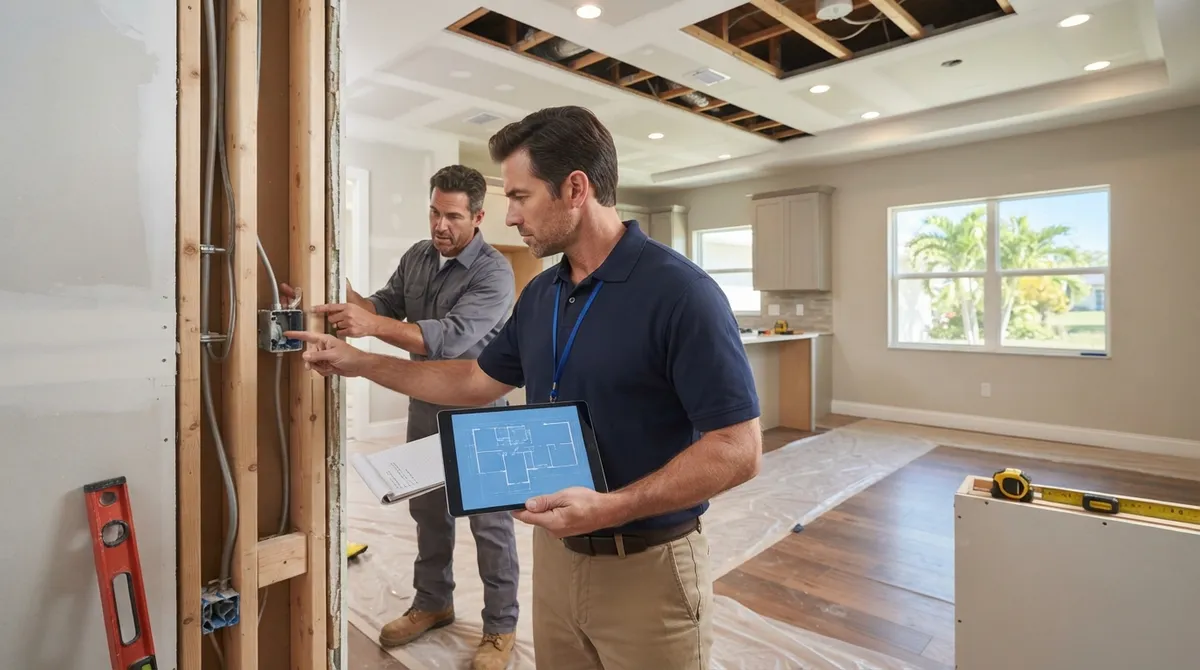
First, Does Your Interior Remodel Actually Need a Permit?
Before you hire anyone, it helps to know where you stand. Florida Statutes section 553.79 generally requires a permit before regulated construction, alteration, repair, or demolition. Whether your specific project is exempt depends on its scope, the current Florida Building Code, and your local building department's rules.
Here's a quick way to think about it:
| Type of Interior Work | Permit Likely Needed? | Why |
|---|---|---|
| Painting, simple flooring swaps | Often no | Typically cosmetic, but rules vary by jurisdiction |
| Minor drywall repair, limited cabinet replacement | Sometimes no | Depends on scope and local policy |
| Moving or removing walls | Usually yes | Can affect structure and egress |
| Extensive drywall removal | Often yes | May expose or alter systems |
| Electrical, plumbing, mechanical, or gas changes | Yes, commonly | Life-safety systems require licensed trades and inspections |
Exemptions vary by county and city, so never assume. Our building department lookup tool can help you find which jurisdiction actually controls your address, which isn't always obvious near city lines.
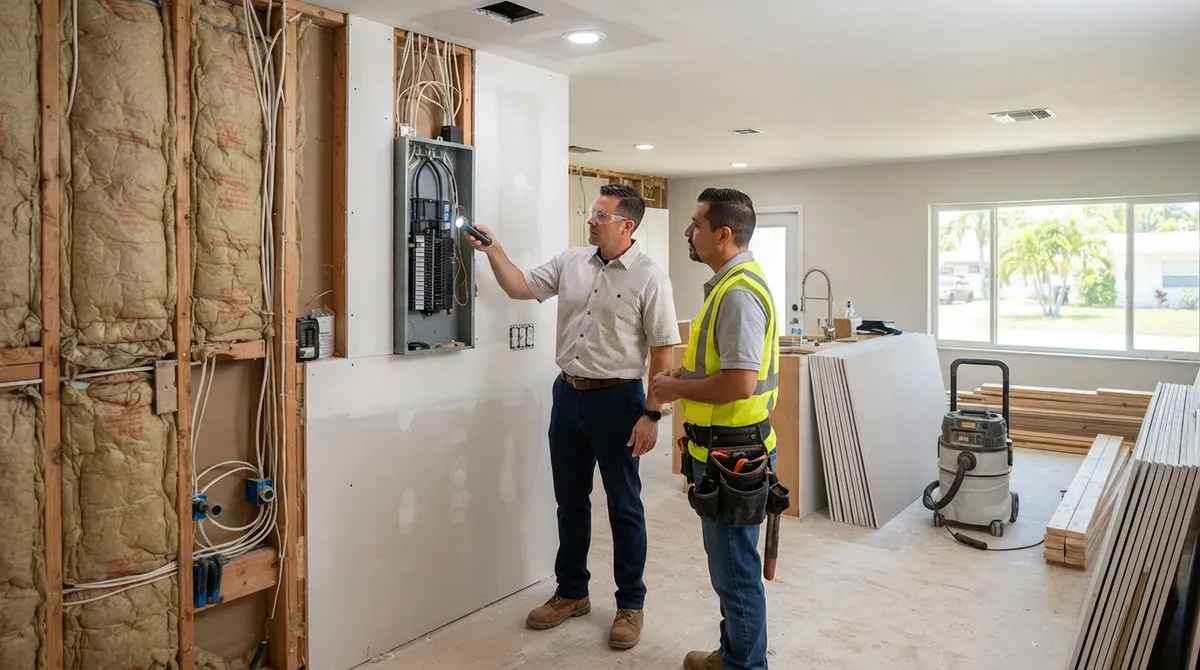
The New July 1, 2026 Under-$7,500 Exemption: Read the Fine Print
You may have heard that Florida is adding a statewide exemption. Effective July 1, 2026, certain qualifying work valued under $7,500 at a single-family dwelling may be exempt from a building permit. That sounds like a lifeline, but it has real limits:
- It does not cover properties partly or wholly in a flood hazard area.
- It does not cover electrical, plumbing, structural, mechanical, or gas work.
- The owner or contractor must submit a written exemption request, with supporting contract or value documentation, to the local enforcement agency.
In other words, don't assume your small or already-finished project qualifies. Ask the building department for a written determination first.
12 Pros and Resources to Hire (or Call) for an Unpermitted Interior Remodel
1. A Permit Facilitation and Filing Team
If you only call one person first, make it someone who can tell you which jurisdiction controls your project, what it will take, and then actually do the work. A dedicated permit facilitation and filing team prepares the application, submits it, tracks it, and works every reviewer comment. This is the backbone of any successful cleanup.
2. A Florida-Licensed General or Building Contractor
For work that requires a permit, you need a Florida-licensed contractor qualified for the relevant trade. A general or building contractor can often take the lead on a full remodel. Verify the license on the state database and confirm local requirements before signing anything. Our guide on Florida contractor license requirements explains what to look for.
3. A Licensed Electrical Contractor
If your remodel touched wiring, outlets, panels, or lighting circuits, you'll likely need a licensed electrical contractor to evaluate and, if needed, correct the work. Electrical is a common reason inspectors open up finished walls, so having a pro assess it early saves headaches.
4. A Licensed Plumbing Contractor
Relocated a sink, added a bathroom, or moved a water heater? A licensed plumbing contractor can document and correct that work to current code. Plumbing changes are excluded from the new $7,500 exemption, so expect permits and inspections here.
5. A Licensed Mechanical (HVAC) Contractor
Duct changes, new air handlers, and ventilation modifications fall under mechanical work. If you added a room or closed in a space, the HVAC load and airflow may need review by a qualified mechanical contractor.
6. A Licensed Gas Contractor
Kitchen remodels often involve gas ranges, dryers, or water heaters. Any gas line work should be reviewed by a properly licensed gas contractor. This is a life-safety item that building departments take seriously.
7. An Architectural Drafting Professional
Most after-the-fact applications need drawings that show what actually exists. Professional architectural drafting produces clear floor plans and details that reviewers can approve, and it keeps your submittal from bouncing back with avoidable comments.
8. A Drafter for As-Built Drawings
As-built drawings capture the finished conditions of your remodel rather than a proposed design. If you're legalizing work that's already complete, as-built drawings are often the foundation of the whole application.
9. A Structural Engineer
Removed or opened a wall? A structural engineer can evaluate whether it was load-bearing, determine what reinforcement is needed, and provide sealed documentation. Our structural engineering team handles this in house, so there's no waiting on an outside consultant to call someone back.
10. An MEP Engineer
When mechanical, electrical, and plumbing changes are involved, MEP engineering helps document that everything meets current code. This is especially useful for larger remodels or commercial-style spaces.
11. A Professional Who Can Write Engineer Letters
Sometimes a building department wants a sealed statement confirming that existing work is safe and code-compliant. A qualified engineer letter can fill that gap, particularly when walls are closed up and visual inspection isn't enough.
12. A Private Provider for Plan Review and Inspections
In many Florida jurisdictions, you can use a licensed private provider instead of waiting in the county review queue. Private provider plan review and inspections can speed things up, which matters when a closing date or lender deadline is looming.
Which Pro Do You Need? A Quick Matching Guide
| Your Situation | Start With | Add If Needed |
|---|---|---|
| Cosmetic work, unsure about exemption | Building department written determination | Permit facilitation team |
| Moved or removed walls | Structural engineer | Drafter, licensed GC |
| Wiring or panel changes | Licensed electrical contractor | MEP engineer |
| Relocated plumbing or added bath | Licensed plumbing contractor | Drafter, permit facilitator |
| Closing is coming up fast | Urgent permit rescue team | Private provider |
| Work is finished and walls are closed | As-built drafter | Engineer letter, inspector |
What Happens If You Remodel Without a Required Permit?
If work was done without a required permit, contact the local building department and a licensed contractor experienced with permit corrections or after-the-fact permits. The jurisdiction may require plans, inspections, opening finished surfaces, corrections to current code, and applicable fees. Requirements and penalties vary by locality, and there's no reliable statewide figure for average cost or penalty, so beware of anyone who quotes you a flat number without looking at your project.
If you want to understand the consequences in more depth, our article on the penalty for building without a permit in Florida breaks it down, and our guide to legalizing unpermitted work in Florida walks through the process.
Your Step-by-Step Path to Getting Legal
Here's a simple roadmap most homeowners can follow:
- Pause new work. Don't cover anything else up or keep building until you know your status.
- Identify your jurisdiction. Confirm which city or county actually reviews your property.
- Request a written determination. Ask the building department whether your scope needs a permit.
- Document what exists. Photos, measurements, and as-built drawings tell the story.
- Bring in the right licensed trades. Electrical, plumbing, mechanical, and gas pros inspect and correct as needed.
- File the after-the-fact application. Submit plans and supporting documents through your permitting team.
- Pass inspections and close it out. Don't stop until the permit is finaled.
For a deeper look at this process, see our after-the-fact and expired permits service page.
Should You Pull the Permit Yourself as an Owner-Builder?
Florida's owner-builder option is a distinct path from hiring a contractor, and it comes with legal responsibilities. It can work for simpler jobs, but for complex or regulated work, a properly licensed contractor is generally the safer choice. If you do consider it, review our owner-builder permits page and be honest about whether you can manage inspections, subcontractors, and code requirements.
Whichever route you choose, put it in writing. Your contract should state who obtains the permit and who schedules the inspections. Our article on who can pull a permit in Florida clears up a lot of common confusion.
Red Flags When Hiring Someone for This Kind of Job
Not everyone who answers the phone is the right fit. Watch out for these warning signs:
- They suggest skipping permits altogether "to save time."
- They can't show a valid Florida license for the trade they're performing.
- They won't put permit responsibility in the written contract.
- They quote a fixed price before seeing the work or the building department's requirements.
- They tell you a project is exempt without a written determination from the jurisdiction.
A reliable pro will welcome questions and explain their process in plain language.
Why One Coordinated Team Beats Juggling Six Vendors
Here's the honest challenge: after an unpermitted remodel, you could easily end up chasing a drafter, an engineer, three trade contractors, and a county reviewer, all on different timelines. That's exhausting, and it's where deadlines get missed.
This is where 1 Contractor Solutions comes in. We act as Florida's outsourced permitting department. We prepare or review the plans, file the application, track it, work every reviewer comment, and carry it through approval and closeout. Our drafting and engineering are in house, and our own engineer signs and seals the work, so when a reviewer flags something, we fix it directly. We serve all 67 Florida counties and respond within 30 minutes, day or night. You can also see what customers say when you visit us on Google — 1 Contractor Solutions.
If a closing, lender, or stop-work order is putting you on the clock, our urgent permit rescue service is built for exactly that. For homeowners navigating this for the first time, our homeowner resources are a friendly place to start. And if you want to stay connected, you can follow us on LinkedIn or follow us on Facebook for Florida permitting updates.
For official background on the permit requirement itself, you can read the text of Florida Statutes section 553.79 directly on the Legislature's website.
Final Thoughts: You Can Fix This
An unpermitted interior remodel feels stressful, but it's a very solvable problem. Start by confirming your jurisdiction and getting a written determination, then bring in the right mix of licensed trades, drafting, and engineering. Skip the shortcuts, document what's there, and work with people who treat the permit as part of the job, not an afterthought.
When you're ready for a single team to handle the whole thing, get a free quote from 1 Contractor Solutions and let us turn your permit headache into a finished, legal project.
FAQs
Does an interior remodel in Florida need a permit?
Often, yes. Florida Statutes section 553.79 generally requires a permit before regulated construction or alteration, and moving walls or changing electrical, plumbing, mechanical, or gas systems commonly triggers one. Cosmetic work like painting or flooring may be exempt in some places, so always check with your local building department.
Can I get a permit after remodeling without one in Florida?
In many cases, yes. Your jurisdiction may require plans, inspections, corrections to current code, and sometimes opening finished surfaces, along with applicable fees. Working with a licensed contractor and a permitting team experienced in after-the-fact permits makes the process much smoother.
Does the new under-$7,500 Florida permit exemption apply to my remodel?
Maybe, but it has big limits. Effective July 1, 2026, it excludes properties in a flood hazard area and any electrical, plumbing, structural, mechanical, or gas work, and it requires a written exemption request to your local enforcement agency. Don't assume you qualify without confirming in writing.
Who can pull a building permit for an interior remodel in Florida?
A properly licensed Florida contractor qualified for the work can pull the permit, or an owner-builder may do so for certain projects while accepting legal responsibility. For complex or regulated work, a licensed contractor is generally the safer choice, and your contract should say who handles permits and inspections.
We do this work every day across all 67 Florida counties. Call (866) 314-6931 and we will tell you what your situation actually requires — including when you do not need us.
Related services
Permit Facilitation & Filing
You have a crew scheduled, a client asking for dates, and a permit sitting somewhere in a queue you cannot see. We file it, w…
See the servicePlan Review Coordination
A permit in plan review is not one queue. On a commercial project it can be six queues, each with its own reviewer, its own c…
See the serviceReady to get your permit moving?
One call tells you which jurisdiction controls your project, what it will take, and what it will cost. Most of the time we can scope it on the phone.