
Blog
9 Mistakes When Hiring for After-the-Fact Screen Enclosures
Avoid costly errors when legalizing an unpermitted Florida screen enclosure. Learn who to hire, what to ask, and how to get approved in 2026.
Key Takeaways
-
Call your local building department first, since after-the-fact requirements vary by city and county and determine which documents, inspections, and approvals you need.
-
Don't hire only a builder or only a permit expediter; a coordinated team handling drafting, engineering, filing, and corrections avoids finger-pointing and rejected files.
-
Verify any contractor's license is current and covers screen enclosures, because a license does not authorize work outside its category, such as altering load-bearing elements.
-
Ask whether your jurisdiction requires signed and sealed plans, since some counties like Lake County require them while others do not.
-
Interview every provider about past after-the-fact work in your jurisdiction, who seals plans, who pays fees, and what happens if the enclosure cannot be brought into compliance.
-
Flag unpermitted enclosures early when a closing or lender is involved, because time pressure leaves less room to shop around and increases costs.
So you just found out that screen enclosure on your Florida property never had a permit. Maybe you bought the house last spring and the home inspector flagged it. Maybe a prior owner swore everything was "handled." Or maybe a closing is suddenly on hold. First, take a breath. This is more common than you might think, and it is fixable.
The real danger is not the missing permit. It is hiring the wrong person to fix it. Plenty of owners lose weeks and money because they called a pool-cage builder when they needed an engineer, or an engineer when they needed someone who knows the local building department. If you are asking who should I hire for after the fact screen enclosure Florida projects, the answer is usually a small team, not a single person.
In this friendly guide, we walk through nine common hiring mistakes and how to dodge each one. We cover permit consultants, screen-enclosure contractors, and engineers, plus the questions that separate real pros from risky guesses. Whether you are a homeowner, a general contractor, a realtor, or a design pro, you will leave with a clear game plan for 2026.
Why Screen Enclosures Trip Up So Many Florida Owners
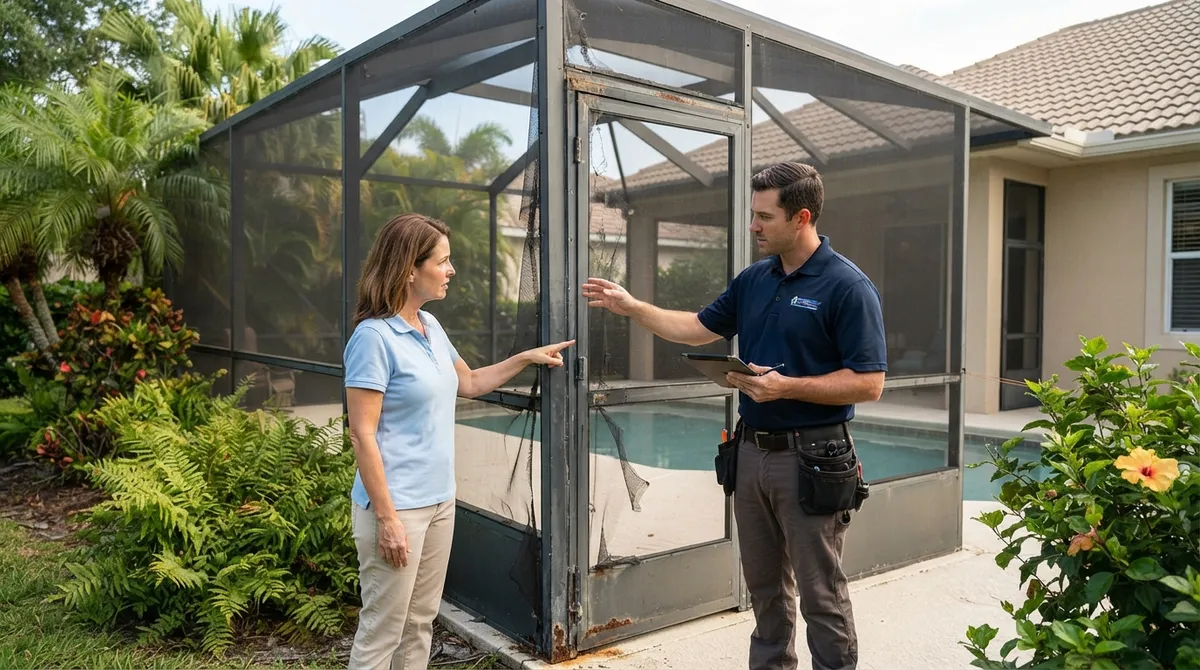
A screen enclosure looks light and simple. Aluminum frame, screen panels, maybe a pool cage. But in Florida, building departments treat these structures seriously because of wind loads, anchoring, and how the frame ties into your home.
Rules, fees, and inspections vary by city and county. What works in one jurisdiction may not fly in the next. That is why the very first call should always go to your local building department, and why who you hire matters so much.
The Three Roles You May Need
Most after-the-fact enclosure projects pull from three different skill sets. Understanding them keeps you from hiring the wrong one.
| Role | What They Do | What They Do Not Do |
|---|---|---|
| Permitting consultant | Identifies the local process, builds the application, files, tracks reviews, answers comments | Replace a licensed contractor or sealed engineering when required; guarantee approval |
| Screen-enclosure contractor | Performs corrective construction, repairs, or rebuilds within license scope | Alter roof trusses, load-bearing walls, lintels, or foundations |
| Engineer or architect | Prepares signed and sealed plans or structural analysis when the jurisdiction requires it | File and track the permit unless that service is offered |
Mistake 1: Skipping the Building Department Call
It is tempting to start by shopping for contractors. Resist that urge. After-the-fact procedures differ by jurisdiction, so the local building department is your best starting point. A short call can tell you what documentation they want, whether inspections are required, and how enforcement is handled.
Do not assume an existing enclosure is legal just because it has stood for years or a previous owner built it. The building department decides what documentation, inspections, corrections, and approvals apply under local requirements and the building code.
Quick Prep for That First Call
- Have your property address and folio or parcel number ready
- Know roughly when the enclosure was built, if you can find out
- Take clear photos of the frame, anchoring, and roof connection
- Ask what an after-the-fact application requires in that jurisdiction
- Ask whether signed and sealed plans are expected
If you are not sure which agency actually controls your address, especially near city lines, the building department lookup tool can point you in the right direction.
Mistake 2: Hiring Only a Builder
Many owners call the company that sells new pool cages and expect them to sort out paperwork. A builder may be great at construction but unfamiliar with after-the-fact packets. Florida does have a certified specialty contractor category for structural aluminum or screen enclosures, and the state describes the scope as including screened porches and pool enclosures. That is helpful for corrective work, but it is not the same as navigating a retroactive permit.
Always check the contractor's current license and confirm that the scope covers what you need. A license does not authorize work outside its category. For instance, a screen-enclosure specialty contractor cannot do work that changes a building's structural integrity, such as altering roof trusses, load-bearing walls, lintels, or foundations. If your enclosure attaches in a way that touches those elements, other licensed trades may need to step in.
Mistake 3: Hiring Only a Permit Consultant
On the flip side, some owners expect a permit expediter to fix everything. A good Florida permitting consultant can identify the local process, assemble materials, coordinate with the building department, and track reviews. That is a big help.
But a consultant does not replace the licensed contractor or design professional when those are required, and hiring one does not guarantee approval. If your enclosure needs corrective construction or sealed plans, someone qualified must perform that part.
The sweet spot is a firm that coordinates all the pieces. That is exactly where an outsourced permitting department shines. 1 Contractor Solutions handles after-the-fact and expired permits and carries the file through filing, tracking, reviewer comments, and closeout, with in-house drafting and engineering behind it.
Mistake 4: Assuming You Do Not Need Sealed Plans
Some jurisdictions want signed and sealed drawings for enclosures, and some do not. Lake County is one local example: its screen-enclosure checklist calls for construction plans signed and sealed by an architect or engineer. That is a local requirement, not a statewide rule for every case, so never assume your county matches.
When the enclosure's design or existing construction must be documented or corrected, the local authority may ask for engineering. Having an engineer who can verify anchoring, connections, and wind resistance gives the reviewer something concrete to approve. Our team provides structural engineering and as-built drawings, so documentation of what already exists is not a separate scavenger hunt.
When Engineering Is Most Likely
- The enclosure is large, tall, or attached to a pool deck
- The connection to the house or roof is unclear
- The jurisdiction's checklist calls for sealed plans
- A reviewer has questioned anchoring or wind load
- There are no original drawings available
Mistake 5: Not Verifying the License
This one is simple but skipped constantly. Before any contractor touches your enclosure, confirm that their license is current and that it covers screen enclosures. Florida Statutes section 489.113 requires a person to be certified or registered to engage in contracting, while describing certified specialty categories as voluntary statewide licensing categories unless a specific statute makes licensure mandatory.
The takeaway for you: do not accept a verbal "yeah, I'm licensed." Look up the license, check that it is active, and match it to the work. Contractors who need help with local registrations can review our contractor registration checklist, and our guide to Florida contractor license requirements explains the basics.
Mistake 6: Forgetting to Ask the Right Questions
Before you sign anything, interview every provider. The answers tell you almost everything. Here is a numbered checklist you can copy into your notes.
- Have you handled after-the-fact enclosure permits in my specific city or county?
- Who will prepare the plans, and who will sign and seal them?
- Is corrective construction included, or is that a separate contractor?
- How are inspections scheduled and handled?
- Who pays permit fees, and how are they billed?
- What happens if the enclosure cannot be brought into compliance?
- How quickly will you respond when the reviewer sends comments?
Notice question six. Not every unpermitted structure can simply be legalized as-is. A trustworthy provider will explain the possible outcomes, including correction or removal, rather than promise a perfect result.
Mistake 7: Ignoring Hidden Costs and Timelines
Fees are not uniform. After-the-fact permits can carry higher fees, extra inspections, or penalties depending on the jurisdiction. Lake County's checklist, for example, mentions a notice of commencement for permits with a job value over $5,000, but again, that is one county's checklist and not a universal rule.
Instead of chasing a single price, ask for a breakdown that separates the parts of the job.
| Cost Bucket | What It Covers | Who Usually Handles It |
|---|---|---|
| Permit and review fees | Government charges, which vary by jurisdiction | Paid through the permitting provider or owner |
| Drafting and engineering | As-builts, sealed plans, structural verification | Engineer, designer, or in-house team |
| Permit administration | Filing, tracking, reviewer comments, resubmittals | Permitting consultant |
| Corrective construction | Anchoring fixes, repairs, partial rebuild | Qualified screen-enclosure contractor |
| Inspections | Building department or private provider visits | Coordinated by consultant or contractor |
For more context on pricing, see our breakdown of after-the-fact permit costs in Florida.
Mistake 8: Hiring Separate Pros Who Never Talk to Each Other
Here is a scenario we see often. The owner hires an engineer, a contractor, and an expediter independently. The engineer's letter does not match what the contractor built. The expediter files the wrong version. The reviewer rejects it, and everyone blames someone else.
A single coordinated team avoids that finger-pointing. When drafting, engineering, filing, and revisions live under one roof, a reviewer comment gets fixed instead of bounced between three phone calls. That is the model behind plan review coordination and revisions and resubmittals done in house.
It also matters for different audiences. A general contractor managing several jobs needs reliable tracking. A realtor with a closing date needs speed and clear communication. A homeowner just wants someone to explain the steps without jargon. The right partner adapts to each.
Mistake 9: Waiting Until a Closing or Violation Forces Your Hand
Time pressure makes every decision harder and more expensive. If a closing is on the calendar, a lender is asking questions, or a code officer has already sent a notice, you have less room to shop around. If a notice is already in your hands, our guide to what to do after a Florida code enforcement notice is a good next read.
Realtors and investors especially should flag unpermitted enclosures early in the transaction. Our realtor and closing support exists for this exact situation, and our urgent permit rescue service steps in when a hold or stop work order lands unexpectedly.
A Simple Game Plan to Follow
- Call the local building department and learn the after-the-fact process
- Photograph and measure the existing enclosure
- Check whether sealed plans or engineering are expected
- Hire a coordinated permitting team that can draft, engineer, file, and track
- Bring in a verified, properly scoped contractor only if corrective work is needed
- Complete required inspections and close out the permit
Who Should You Hire? A Quick Decision Guide
Still wondering who to hire for an after-the-fact screen enclosure in Florida? Use this shortcut.
- You are not sure what the city wants: start with a permitting consultant and the building department
- The jurisdiction wants sealed drawings: add an engineer or architect, ideally through the same team
- The enclosure needs repairs or anchoring fixes: add a certified screen-enclosure contractor and verify the license
- Structural trusses or load-bearing elements are involved: expect other licensed trades to join
- You are a contractor or investor with several properties: choose a firm that handles volume and tracks every file
1 Contractor Solutions operates as Florida's outsourced permitting department across all 67 counties, with in-house drafting and engineering and a response time of 30 minutes day or night. If you want to see how others feel about working with us, visit us on Google — 1 Contractor Solutions and read the reviews. You can also follow us on LinkedIn or follow us on Facebook for more Florida permitting tips.
For a deeper look at the broader process, our guide to how to get an after-the-fact permit in Florida pairs nicely with this article.
Final Thoughts: You Are Not in This Alone
An unpermitted screen enclosure is a bump in the road, not a dead end. The owners who come out ahead call the building department first, build a small coordinated team, verify every license, and ask honest questions about what happens if the enclosure cannot be brought into compliance. The ones who struggle hire one person, assume the best, and hope.
You deserve a partner who explains each step plainly and keeps the file moving. Ready to get your enclosure legalized without the runaround? Reach out today to get a free quote and let our team map out the fastest path for your property.
FAQs
Who can help me get an after-the-fact permit for a screen enclosure in Florida?
Start with your local building department, then consider a Florida permitting consultant to handle the application, filing, and tracking. Depending on your jurisdiction, you may also need a qualified screen-enclosure contractor and an engineer or architect. A coordinated team keeps everything consistent.
Do I need a licensed contractor to legalize an unpermitted screen enclosure?
Not always for the paperwork itself, but if the enclosure needs corrective construction, you will want a contractor whose license covers screen enclosures. Always verify the license is current and that the scope matches the work. Requirements vary by city and county, so confirm with your building department.
Does a Florida screen enclosure after-the-fact permit require engineered plans?
It depends on where you live. Some jurisdictions, like Lake County, require plans signed and sealed by an architect or engineer, while others may ask for less. Check your local checklist before assuming either way.
What happens if my screen enclosure cannot be brought into compliance?
If an enclosure cannot meet code, the building department decides the outcome, which may include required corrections or even removal. A good provider will be upfront about this possibility rather than promising approval. Asking early helps you plan and budget with confidence.
Can a permitting consultant apply for an after-the-fact permit on my behalf?
Yes, a permit consultant or expediter can typically help assemble materials, file the application, and coordinate with the building department. They do not replace a licensed contractor or design professional when those are required, and they cannot guarantee approval.
We do this work every day across all 67 Florida counties. Call (866) 314-6931 and we will tell you what your situation actually requires — including when you do not need us.
Related services
Permit Facilitation & Filing
You have a crew scheduled, a client asking for dates, and a permit sitting somewhere in a queue you cannot see. We file it, w…
See the servicePlan Review Coordination
A permit in plan review is not one queue. On a commercial project it can be six queues, each with its own reviewer, its own c…
See the serviceReady to get your permit moving?
One call tells you which jurisdiction controls your project, what it will take, and what it will cost. Most of the time we can scope it on the phone.